
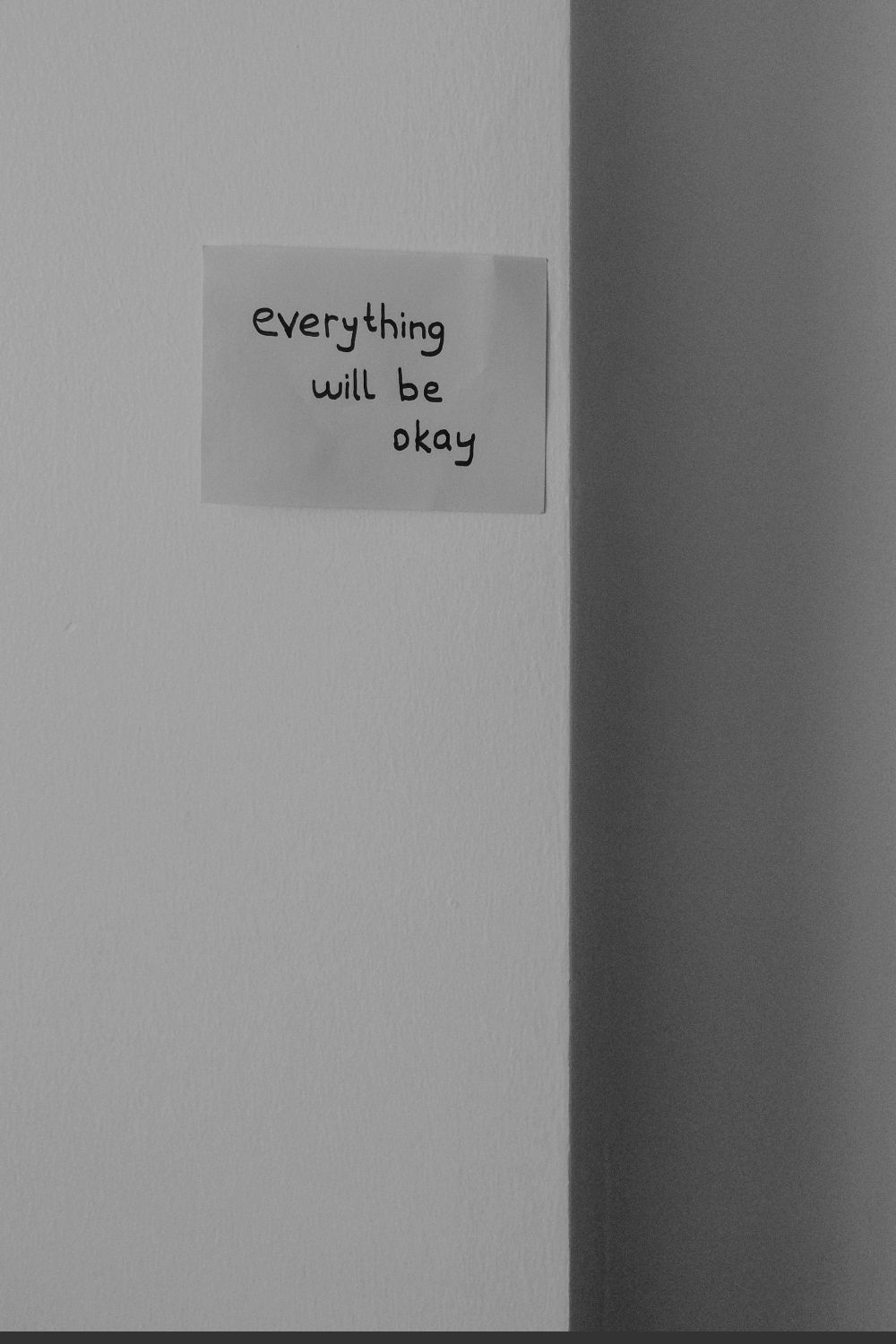
Affirmations tend to fail when there’s too much distance between what you’re saying and what you actually believe right now. That gap doesn’t close through repetition — it closes when the affirmation meets you where you actually are.
You’ve probably tried affirmations at some point. Maybe you wrote them in a journal, repeated them in the mirror, or listened to a playlist of them while you got ready in the morning. And maybe if you’re being honest, it felt a little hollow. Like you were trying to convince yourself of something your body already knew wasn’t true.
That’s not a you problem. That’s a gap problem.
The gap your nervous system won’t ignore
The most common affirmation advice goes something like this: say it as if it’s already true. “I am wealthy.” “I am confident.” “I am at peace.” Repeat it enough and your brain will catch up.
The issue is that your brain is already listening — and it knows the difference.
When there’s a significant gap between what you’re saying and what you’re actually living, the affirmation doesn’t land as truth. It lands as contradiction. And your nervous system, which is very good at detecting contradiction, quietly files it under lie and moves on.
One person put it plainly in a conversation about this: tell yourself “I am calm” in the middle of a panic attack and the panic gets worse. Not because affirmations are useless — but because the gap was too wide. The body rejected it before it could take root.
The visualization problem
Here’s what the research actually suggests: affirmations don’t work through repetition alone. They work through what you visualize as you say them.
Say “I earn a six-figure income” while you’re stressed about rent and your mind doesn’t picture abundance. It pictures the bills. The affirmation becomes a shortcut straight to the anxiety you were trying to move away from. You’ve just trained your brain to associate that phrase with lack.
This is why generic affirmations can sometimes make things worse. The words are positive. The image they trigger isn’t.
Five reasons generic affirmations fail
Understanding the pattern makes it easier to break it. It also helps to know that “affirmation” covers several different things at once — there’s a full map of the types of affirmations if you want to see which kind you’ve been reaching for. Here’s what’s usually going wrong — and how to make affirmations work differently:
-
They ask you to perform, not process. “I am confident” skips the part where you actually build the feeling and asks you to just declare it. Your nervous system notices the shortcut.
-
They skip the emotional bridge. The goal of an affirmation isn’t to say the right words — it’s to access a real feeling. When the words don’t connect to anything you’ve actually experienced, they stay on the surface and go nowhere.
-
The gap is too wide. The bigger the distance between the affirmation and where you actually are, the more resistance your brain generates. That’s not pessimism. It’s just how the brain processes truth.
-
They’re borrowed, not personal. A list of generic affirmations was written for everyone, which means it was written for no one in particular. What resonates for someone else might land completely flat for you — and that’s not a failure of belief.
-
They’re used in the wrong moment. Affirmations aren’t a fire extinguisher. Reaching for “I am at peace” in the middle of a spiral is asking too much of four words. Timing and emotional state matter more than most people realize.
What actually closes the gap
The shift isn’t about believing harder. It’s about finding positive affirmations that feel true — even slightly, even just right now.
Not I am healed, but I am healing. Not I have everything I need, but I am learning to trust what I have. Not I am at peace, but I am allowed to take this one moment at a time.
These land differently because there’s nothing to contradict. Your nervous system doesn’t push back. The words don’t trigger their own negation. You’re not lying to yourself. You’re reminding yourself of something you temporarily forgot.
Here’s what that reframe looks like in practice:
| Instead of… | Try… |
|---|---|
| I am worthy of love | I am learning to receive care without guilt |
| I am successful | I am building something that matters to me |
| I am fearless | I can feel afraid and still move forward |
| I am healed | I am giving myself time to heal |
| I have everything I need | I have gotten through hard days before |
| I am enough | Right now, I am doing enough |
The difference isn’t optimism vs. pessimism. It’s performance vs. presence.
Grounded affirmations, not grandiose ones
The most useful affirmations aren’t aspirational declarations. They’re anchors — especially on difficult days. Small, true things you can return to when the noise gets loud, not to manifest a future, but to come back to yourself in the present.
Affirmations for difficult days don’t need to be powerful. They just need to be reachable:
I honor my own pace. I am allowed to feel this. I don’t have to have it all figured out today. This feeling is temporary. I have been here before and found my way through. I am allowed to rest. I don’t need to perform okay right now.
These work because they meet you where you are instead of asking you to perform your way to somewhere else. There’s no gap to cross. Just a quiet truth, said out loud, at the moment you need it most.
Frequently asked questions
Why do affirmations feel fake or cringey?
Usually because the gap between the affirmation and your current reality is too wide. When something doesn’t feel true, your body registers it as a lie. The fix isn’t to believe harder — it’s to find a version of the statement that’s already slightly true.
How do you actually make affirmations work?
Start smaller than you think you need to. Instead of “I am confident,” try “I am learning to trust myself.” Instead of “I am at peace,” try “I am allowed to feel uncertain right now.” The goal is a statement your nervous system can receive, not perform.
What are positive affirmations that feel true even on hard days?
Things like: “I don’t have to have it figured out today,” “I have gotten through hard days before,” or “I am allowed to take this one moment at a time.” The bar is simply: can I say this without my body immediately rejecting it?
Is it normal for affirmations to feel uncomfortable?
Yes — especially at first, and especially if the gap is wide. Some discomfort is okay. But if the words make your anxiety spike or the statement feels actively untrue, it’s worth finding something closer to where you actually are.
Do I need to use affirmations every day?
Not necessarily. Consistency can help, but forcing a daily ritual you dread doesn’t serve you. Affirmations are most effective when they’re contextual — used in the moments you actually need them, not as a performative habit.
That’s the philosophy behind the affirmations in Zillinity: contextual, grounded, written for where you actually are — not where you’re supposed to be.
If you want to try it, see how it works first, or jump straight in — Create a space or Explore spaces are both good places to start. No performance required.